

A Guide for Individuals with IDD & Their Families
At The Limbaugh Law Firm, we believe in focusing on people, not problems. Our goal is to empower you to protect your rights and dignity while planning for a secure future. Supported Decision-Making (SDM) is a powerful tool that allows individuals with Intellectual and Developmental Disabilities (IDD) to remain the primary decision-maker in their own lives.
What is Supported Decision-Making?
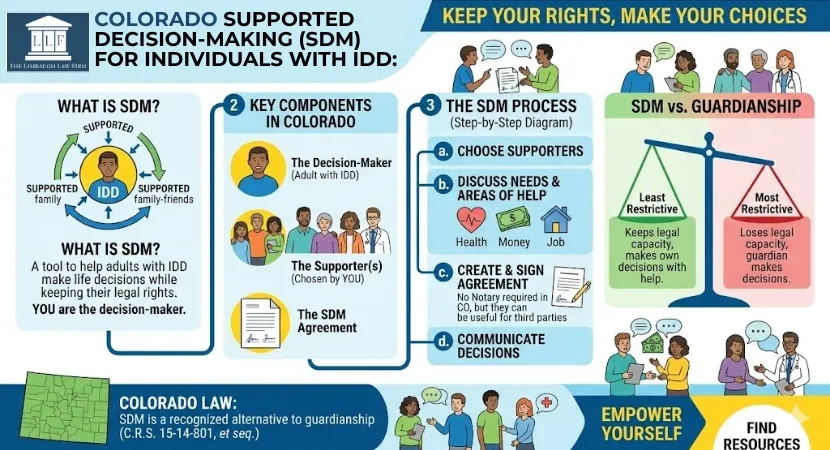
In 2021, Colorado Revised Statute 15-14-801, was codified and became Colorado law. Supported Decision-Making is a document defining a voluntary arrangement where an adult with a disability chooses a “supportive community” to help them make life choices. Unlike guardianship, which can strip away legal rights, SDM keeps you in the driver’s seat.
The Limbaugh Law Firm is aligned with The Arc of Colorado’s movement, “Nothing About Us Without Us.” The best way for us to know what our client’s need is to talk to them. SDM is about keeping that conversation going with the people you trust most.
How the Process Works
We’ve designed a straightforward approach to help you navigate this transition, mirroring our proven estate planning process:
| Step | Action | What it Means |
| 1. Identify | Define areas for support. | Do you need help with medical choices, finances, or living arrangements? |
| 2. Choose | Select your Supporters. | Pick family, friends, or professionals who listen to you and respect your wishes. |
| 3. Draft | Create the Agreement. | A formal document outlining how your supporters will assist you. |
| 4. Execute | Sign and Notarize. | The agreement must be signed voluntarily in front of two witnesses or a notary. |
| 5. Share | Inform your community. | Provide copies to doctors, banks, and schools so they know how to support you. |
The Role of a Supporter
A supporter is like a coach, not a boss. They are there to:
- Access & Explain: Help you gather information and understand complex documents.
- Analyze: Discuss the “pros and cons” of different choices.
- Communicate: Help you share your final decision with others (like a doctor or employer).
- Respect: Always remember that the final and ultimate decision belongs to you.
Why Choose SDM Over Guardianship?
While Guardianships and Conservatorships are necessary in some cases, SDM is a less restrictive alternative that:
- Promotes Independence: Individuals who make their own choices often have better life outcomes.
- Protects Rights: You retain your right to vote, marry, and manage your own affairs.
- Is Flexible: You can “fire” a supporter or change your agreement at any time as your needs evolve.
Planning with Experience
Our firm is unique because of our personal experience within the disability community. We offer fixed-fee pricing to take the fear out of legal costs, so we can focus on what matters: thoughtful planning for your unique journey.
Your SDM Checklist: Areas of Support
In Colorado, a Supported Decision-Making (SDM) agreement is tailored specifically to your life. You don’t have to give up control over everything—you only choose the areas where you want a little extra help.
Based on C.R.S. 15-14-801, here are the common “Life Domains” you can include in your agreement. Use this list to think about where a Supporter might be most helpful:
1. Financial Matters
- Budgeting: Deciding how to spend “fun money” versus paying bills.
- Banking: Opening an account, using an ATM, or monitoring for fraud.
- Large Purchases: Buying a car, signing a lease, or managing a Special Needs Trust.
- Government Benefits: Help with SSDI, SSI, or Medicaid paperwork.
2. Health & Medical Care
- Appointments: Scheduling visits and remembering to go.
- Understanding Doctors: Having someone explain a diagnosis or the risks of a surgery.
- Medication: Managing prescriptions and understanding side effects.
- Mental Health: Choosing a therapist or support group.
3. Living Arrangements
- Where to Live: Choosing an apartment, a roommate, or a group home.
- Household Tasks: Help with grocery shopping, meal planning, or cleaning schedules.
- Safety: Understanding how to use a security system or what to do in an emergency.
4. Employment & Education
- Job Hunting: Filling out applications or practicing for interviews.
- On the Job: Understanding workplace rules or asking for “reasonable accommodations.”
- Learning: Choosing classes, signing up for vocational training, or navigating an IEP/504 plan transition.
5. Social & Personal Life
- Relationships: Support in understanding healthy boundaries in friendships or dating.
- Community: Finding clubs, sports (like Special Olympics), or religious groups.
- Legal: Understanding your rights if you are treated unfairly.
How to Use This List
- Check the boxes that feel overwhelming to do alone.
- Match the Supporter to the task (e.g., maybe Mom helps with medical, but a sibling helps with social/job choices).
- Bring these notes to our office, and we will weave them into a formal, legal SDM Agreement.
Remember: You can change these at any time. As you get better at a task, you can remove it from your agreement!
Choosing Your Team: The Role of a Supporter
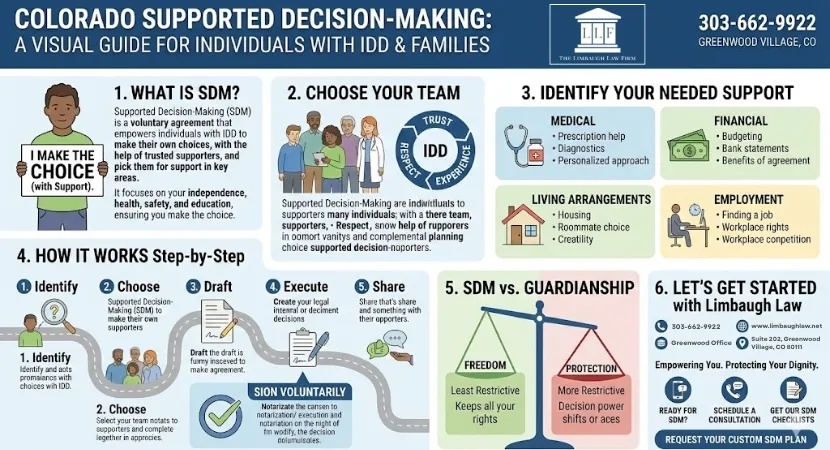
In Colorado, a “Supporter” isn’t just a helper—they are a vital part of your supportive community. Because our firm values dignity and individualized planning, it’s important to choose people who truly understand your desires and personal values.
Under C.R.S. 15-14-801, there are specific legal guardrails for who can be a supporter and what they must do.
Who Can Be a Supporter?
A supporter can be almost anyone you trust, such as:
- Family members (parents, siblings, etc.)
- Trusted friends or neighbors
- Professionals (teachers, coaches, or advocates)
The “Vibe” Check: Colorado law defines a supporter as someone who “understands the adult’s desires and personal values.” Pick someone who listens more than they talk.
The Supporter’s “Code of Conduct”
By law, every supporter you choose must agree to these four core promises:
- Be Your Information Agent: They must provide you with the most up-to-date and relevant information available so you can make an informed choice.
- Respect Your Final Word: They must acknowledge that the final and ultimate decision is yours, not theirs.
- No Pressure: They are legally prohibited from coercing or manipulating you into making any decision.
- Stay “Hands-Off” Your Assets: Being a supporter does not give someone the right to use your money or personal info for their own benefit.
Legal Requirements for the Agreement
To make it official at The Limbaugh Law Firm, your agreement must:
- Be Voluntary: You and your supporters must sign it without any outside pressure.
- Be Witnessed: It must be signed in front of two disinterested witnesses (people who don’t benefit from the agreement) or a Notary Public.
- Be Specific: It should list the exact areas (like health or money) where you want help.
When does it end?
Independence means having the power to change your mind. The agreement ends if:
- You decide it’s over: You can terminate the agreement at any time.
- The Supporter resigns: They can also choose to stop being a supporter.
- Safety Concerns: The agreement is automatically terminated if a supporter is found by Adult Protective Services to have mistreated you or is convicted of certain crimes.
Your Consultation Checklist: Getting Started with SDM
Preparing for your first meeting doesn’t have to be stressful. At The Limbaugh Law Firm, we want to spend our time focusing on your goals, not just your paperwork.
Here is a simple checklist of what to bring and what to think about before we sit down together:
1. The “Support Team” List
- Names and Contact Info: Write down the names of the people you are considering as your Supporters.
- Roles: Think about who is best at what. (e.g., “Uncle Jim is great with money; Sarah is best for medical help.”)
- Backups: It is always a good idea to have a “successor” supporter in case your first choice is unavailable.
2. The “Areas of Support” Draft
- Review the checklist we discussed earlier.
- Identify your “Must-Haves”: Which 2 or 3 areas are the most important for you to get help with right now?
- Identify your “No-Go’s”: Are there areas of your life where you want zero help and want to remain completely independent?
3. Current Documents (If you have them)
- Identity: A state-issued ID or birth certificate.
- Existing Plans: If you already have a Power of Attorney or a previous guardianship order, please bring copies.
- Medical/Educational: Any recent IEP (Individualized Education Program) or a summary of medical needs that might help us describe the type of support you require.
4. Your Big Questions
- Write down any fears or “what-if” scenarios you have.
- Are you worried about how a bank will react to the agreement?
- Are you wondering how this affects your Special Needs Trust?